Macro Nutrition for Busy Professionals in Redmond: How It Actually Works
If you work in tech in Redmond and you’ve tried to figure out macros on your own, you already know the rabbit hole. Apps that demand 20 minutes a day of logging, conflicting advice from every podcast, and the lurking suspicion that you’re probably doing it wrong. Macro tracking works. But for most busy professionals, the version sold online isn’t the version that actually fits your life.
Here’s how we coach nutrition at Sasquatch Strength & Nutrition, what macros actually mean, and how to set them up so they support your goals instead of running your life.
What macros actually are
Three macronutrients make up the calories in your food: protein, carbs, and fat. Each does a different job.
Protein builds and protects muscle, keeps you full, and has the biggest impact on body composition. Most people in Redmond are eating about half what they need.
Carbs fuel your training, your brain, and your sleep. Quality matters. Whole-food carbs from rice, oats, potatoes, fruit, and vegetables behave very differently than ultra-processed versions.
Fat supports hormones, brain function, and satiety. You need it. The kind matters more than the amount for most people.
Total calories still set the ceiling for fat loss or gain. Macros decide what kind of body composition you build with those calories.
Why busy professionals struggle with generic meal plans
The 6-meals-a-day, weighing-every-bite version of macro tracking was built for bodybuilders with a lot of free time and a kitchen scale on the counter. If your day is back-to-back meetings, a 6 PM pickup, and dinner at 7:30, that version of nutrition will fail within two weeks.
What works for busy professionals looks different. Three to four meals a day, mostly. Protein at every meal as the anchor. A simple system for restaurants, work events, and travel. Tracking that takes minutes, not hours, and that you can drop for a weekend without falling apart.
That’s the kind of coaching included with our 52-Week, 24-Week, and 12-Week memberships. The Ready tier covers training only, for people who already have nutrition handled.
A reasonable starting point
Every body is different and a coach should personalize, but here’s a sensible default for an active professional who wants to lose fat while protecting muscle:
Protein: 0.8 to 1 gram per pound of goal body weight. For most adults that lands between 130 and 180 grams a day. Spread across 3 to 4 meals.
Carbs: enough to fuel training. For most people training Build and Grind sessions three to four times a week, that’s 150 to 250 grams a day, weighted toward training days.
Fat: fills the rest. Usually 60 to 90 grams a day, mostly from whole foods like olive oil, nuts, eggs, fatty fish, and dairy if you tolerate it.
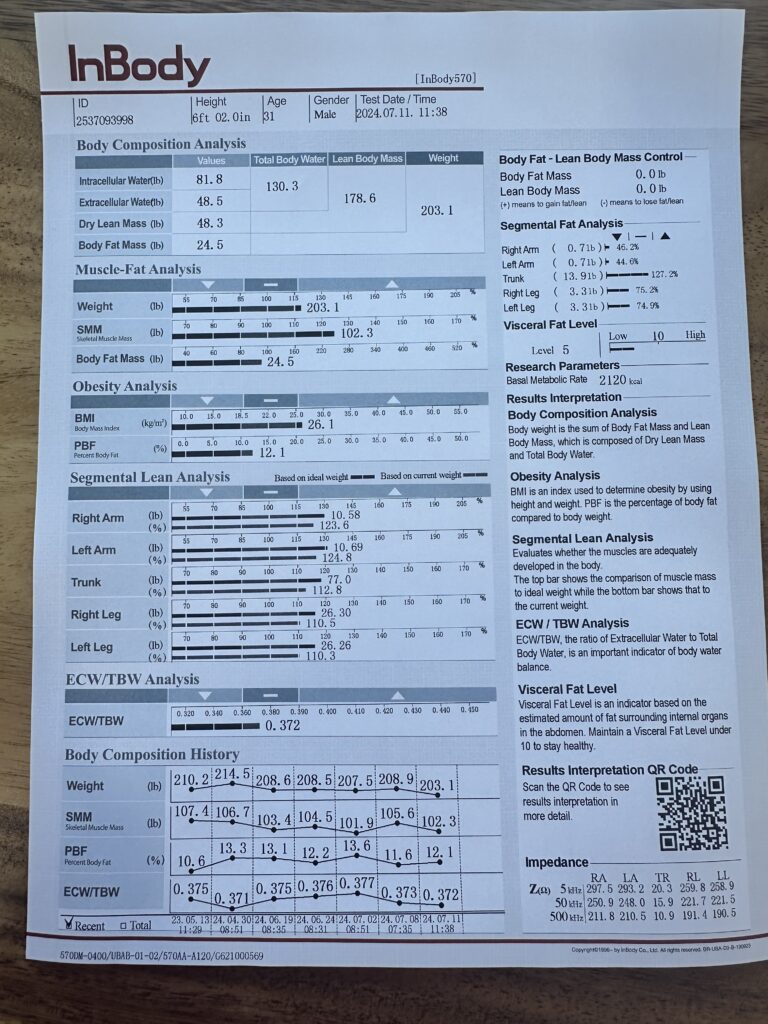
These numbers move based on your InBody scan, your training load, your sleep, your stress, and how you actually respond. That’s what a coach is for. You don’t have to figure it out alone.
What a real day looks like
Breakfast: Greek yogurt with berries and a scoop of whey, or eggs with sourdough and avocado. 35 to 45 grams of protein.
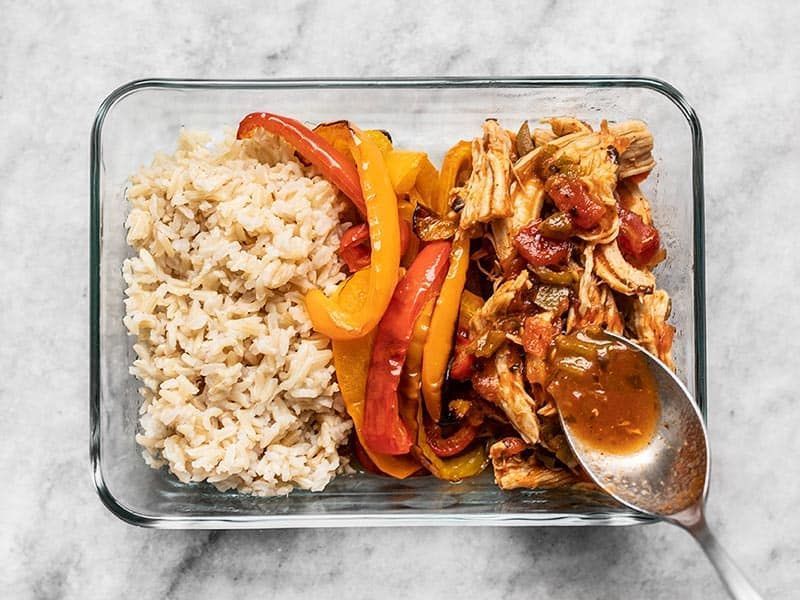
Lunch: rice bowl with chicken or salmon, vegetables, and a drizzle of olive oil. 40 to 50 grams of protein.
Snack: cottage cheese, jerky, or a protein shake if you’re rushed. 20 to 30 grams of protein.
Dinner: steak, ground beef tacos, or a stir-fry with whatever’s in the fridge. 40 to 50 grams of protein.
That’s roughly 150 grams of protein without measuring much of anything. The structure does the work.
Tools we actually recommend
MacroFactor or Cronometer for tracking. Both are quick, intuitive, and good at the math.
A food scale at home for the first few weeks, just to calibrate your eyeball. You’ll be surprised how off your guesses are at first. After a month you can usually stop weighing.
A protein-first restaurant strategy. Walk into any restaurant and ask: where’s my protein, where’s my produce, where’s my carb. Two of those three on the plate, you’re winning.
One non-tracking day a week. Stay reasonable, lean on protein, enjoy your meal out. Tracking is a tool, not a religion.
How nutrition coaching works at Sasquatch
If you’re a member at our 52-Week, 24-Week, or 12-Week tier, you have a coach reviewing your nutrition, adjusting macros based on your progress, and answering the random Tuesday text about what to eat before a flight. Members track their own numbers. Coaches do the strategy, the corrections, and the push.
It’s the same idea as our training: you show up, follow the program, don’t have to think about it. We handle the rest.
Frequently asked questions
Do I have to count macros forever?
No. Most members track closely for a few months, learn what their meals look like, then track more loosely. The skill stays even after the tracking stops.
Can I still eat out?
Yes. Restaurants are where most people fail their nutrition plans because their plans weren’t built for real life. Our coaching builds the restaurant strategy in from day one.
What if I have dietary restrictions?
We work with everything. Vegetarian, dairy-free, gluten-free, low-FODMAP, whatever your body needs. The macros stay the same, the foods change.
Do I need to give up alcohol?
No, but it slows progress. Most members find a sustainable rhythm that includes social drinking without derailing results. If your goal is aggressive fat loss, pulling alcohol back is one of the highest-impact changes you can make.
How long until nutrition changes show up?
Energy and digestion shift in the first one to two weeks. Body composition changes show up clearly on InBody scans by week 6 to 8 of consistent execution.
Get a plan that fits your life
If you’re in Redmond, Sammamish, or anywhere on the Eastside and you’re tired of guessing at nutrition, book a free 30-minute consult. We’ll do an InBody scan, talk through your schedule and your goals, and show you what real coaching looks like.
Want a coach to talk through a plan with you?
Book a free Zoom call. We'll agree on a goal and show you what this could mean for you.
Book my free Zoom call