Strength Training Through Perimenopause: A Guide for Women Over 40 in Redmond and Sammamish
If you’re a woman in your 40s and something feels off, you’re not imagining it. Sleep is lighter, recovery takes longer, weight shows up in places it didn’t before, and the cardio that used to work suddenly doesn’t. That’s perimenopause, and the good news is strength training is one of the most powerful tools you have to work with your changing body instead of fighting it.
At Sasquatch Strength & Nutrition in Redmond and Sammamish, a big part of who we coach is women navigating this exact stretch. Here’s what’s actually happening and how training shifts to match.
What perimenopause does to your body
Estrogen and progesterone start fluctuating, then declining, usually somewhere between your late 30s and early 50s. That hormonal shift affects a lot more than your period.
Muscle mass declines faster without intervention. Bone density starts to drop. Sleep gets disrupted, which tanks recovery. Insulin sensitivity decreases, which means the same carbs you used to eat store as fat more readily. Body composition shifts, often toward more belly fat even if your weight stays the same. Mood, energy, and motivation can swing harder than they used to.
None of this is a personal failing. It’s biology. And the worst response is the one most women try first: more cardio and fewer calories. That accelerates muscle loss, slows metabolism further, and makes everything harder.
Why strength training is the answer
Lifting heavy is the most efficient way to protect and rebuild what perimenopause is taking. Muscle mass. Bone density. Insulin sensitivity. Metabolic rate. Confidence in your own body.
Heavy doesn’t mean impressive numbers in a powerlifting meet. It means challenging for you. The kind of weight where the last two reps are hard, where you’re focused, where your body has a real reason to adapt.
Research keeps stacking up on this. Postmenopausal women who lift consistently have higher bone density, lower fracture risk, better blood sugar control, less abdominal fat, and a markedly lower risk of falls and the cascade of problems that follow. The earlier you start, the more you protect.
What training looks like in our gym
Women over 40 who train with us spend most of their time across two of our five workout types: Build and Grind.
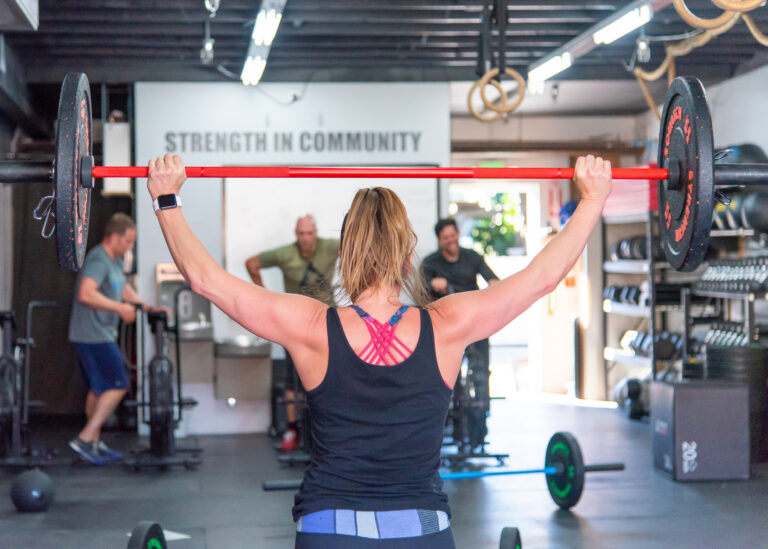
Build sessions are heavy compound lifts. Squats, deadlifts, presses, rows. Progressive overload, meaning the weight or reps inch up over time so your body has a reason to keep adapting. This is what protects bone and muscle.
Grind sessions are muscular endurance, higher reps, often more metabolic. This is where conditioning happens without crushing your joints or recovery the way long cardio sessions can.
We layer in Skill work for movement quality, occasional Sprint work for explosiveness (which declines fast if you don’t train it), and Move sessions for cardio and pacing. Three sessions a week is enough to see real changes. Four to five accelerates it.
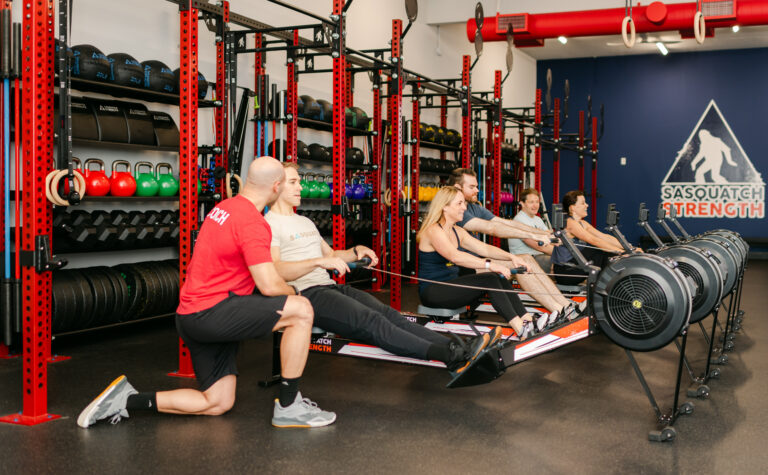
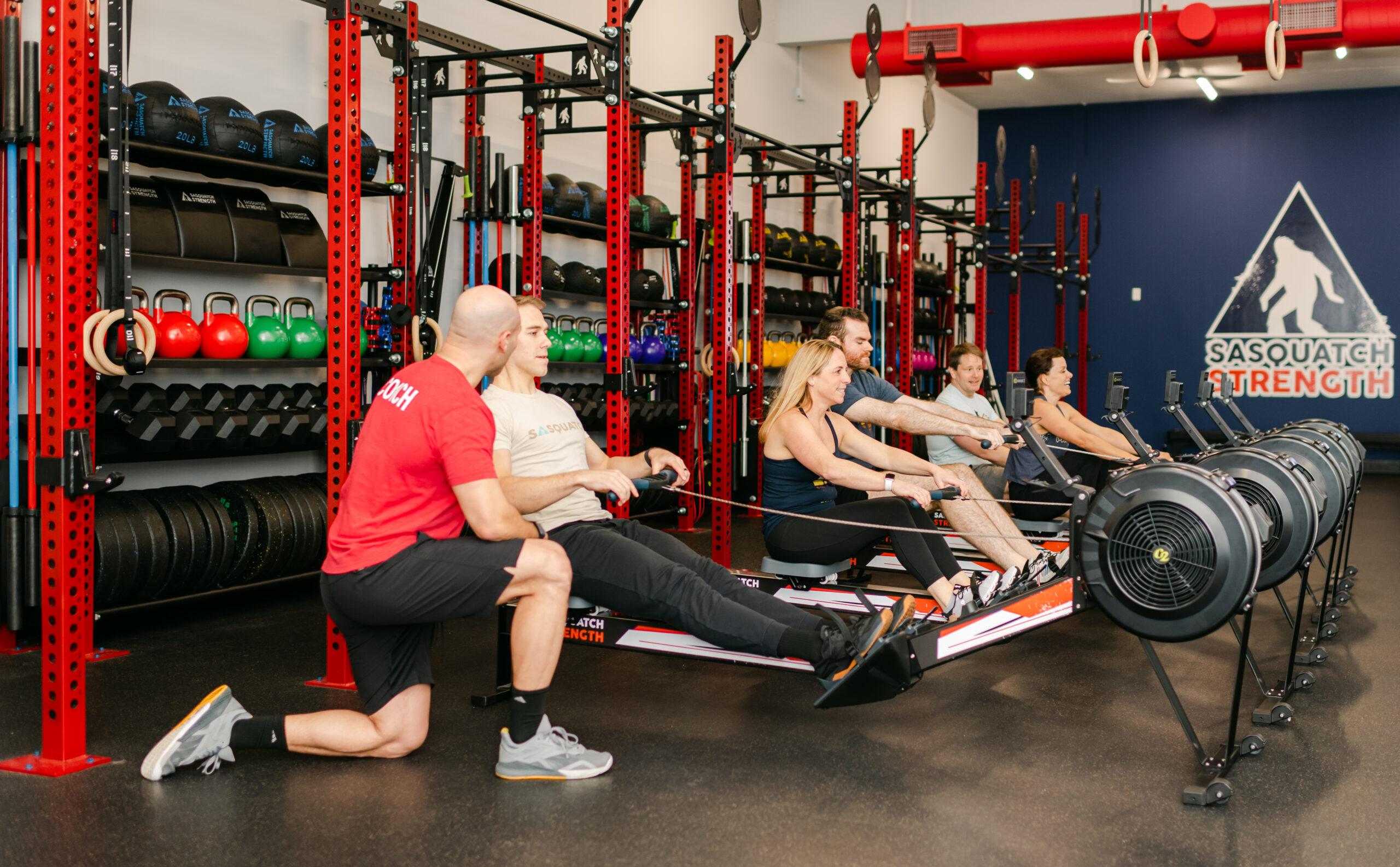
You don’t have to think about any of this. You show up, follow the program your coach writes, and the structure is handled. You track your numbers, your coach watches your form, corrects, and pushes you. That’s the whole deal.
Nutrition during perimenopause
Protein needs go up. Most women under-eat protein their whole lives, and during perimenopause that gap shows up faster as muscle loss. A reasonable target is around 0.8 to 1 gram of protein per pound of goal body weight, spread across the day.
Carbs aren’t the enemy. They support training, sleep, and hormones. Quality matters more than quantity for most people.
Alcohol hits harder. Sleep gets worse, recovery suffers, and belly fat accumulates faster. Most women see big changes when they pull alcohol back without changing anything else.
Our 52-Week, 24-Week, and 12-Week membership tiers include nutrition coaching, so you’re not guessing. The Ready tier covers training without nutrition coaching if you’ve already got that piece dialed in.
When to consider medical optimization
Training and nutrition do a lot. Sometimes they don’t do enough on their own, and that’s worth getting checked. Hormone testing through a qualified provider can show whether HRT, thyroid support, or other interventions might help.
We partner with KIS Rx for the medical side. If labs indicate and a provider approves, you can have training, nutrition, and medical optimization working together. Always defer to your provider on the medical decisions. Our job is the strength side, with medical oversight from people qualified to provide it.
Frequently asked questions
Will lifting make me bulky?
No. The hormonal environment in perimenopause makes building large amounts of muscle slower, not faster. What you will get is leaner, stronger, and more defined.
I have joint pain. Can I still lift?
Usually yes, with smart programming. Coaches adjust movements based on what your body needs. Many women find joint pain decreases after a few months of consistent training because the surrounding muscles finally support the joint.
What if I’ve never lifted before?
That’s most of who we work with. You don’t need experience. You need a coach who can teach the movements safely and a program that meets you where you are.
How long until I see results?
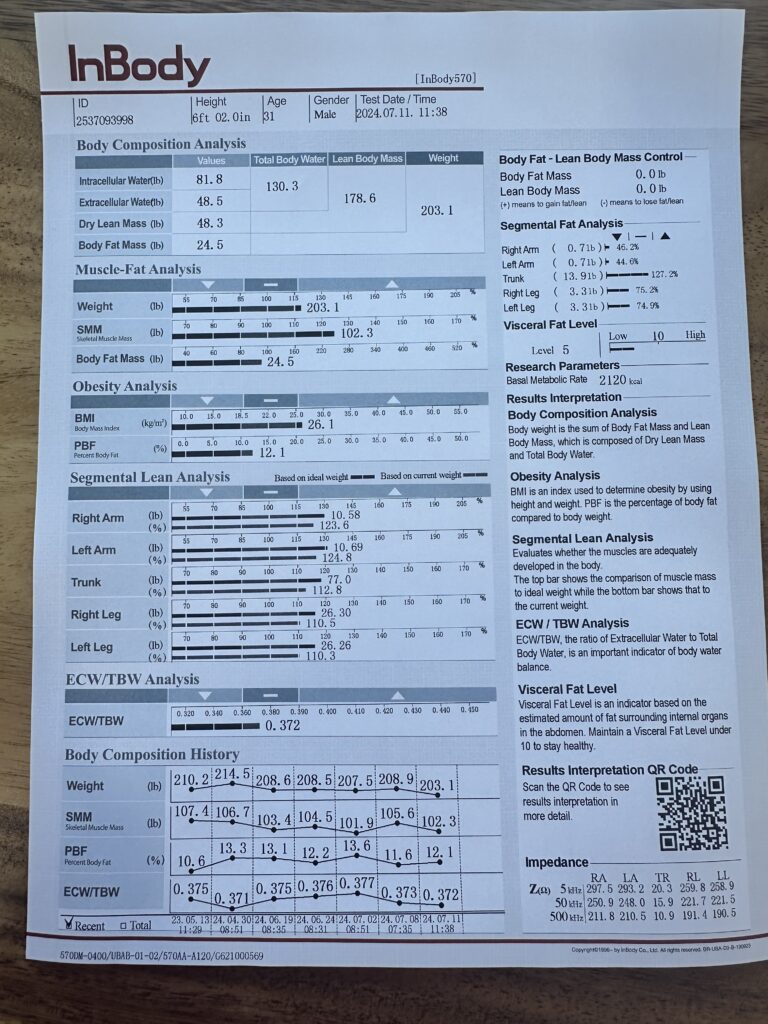
Strength changes show up in the first three to six weeks. Body composition changes are usually noticeable around 8 to 12 weeks of consistent training. InBody scans every month or so help you see the changes the mirror can miss.
Do I need HRT to see results?
No. Many women get great results with training and nutrition alone. HRT is a conversation to have with a qualified medical provider if symptoms warrant it.
Start with a consult
If you’re in Redmond, Sammamish, or anywhere on the Eastside and perimenopause has you feeling like your old playbook stopped working, come in. Book a free 30-minute consult. We’ll do an InBody scan, talk through what’s going on, and show you what a program built for your body actually looks like.
Medical disclaimer: This article is for educational purposes only and is not medical advice. Hormone replacement therapy and related medical interventions require evaluation and prescription by a qualified healthcare provider. Always consult a licensed provider before starting, changing, or stopping any medication or supplement. Sasquatch Strength & Nutrition does not prescribe medications. Medical optimization is handled by KIS Rx providers based on individual labs and clinical judgment.