6 Reasons to Work on a Handstand
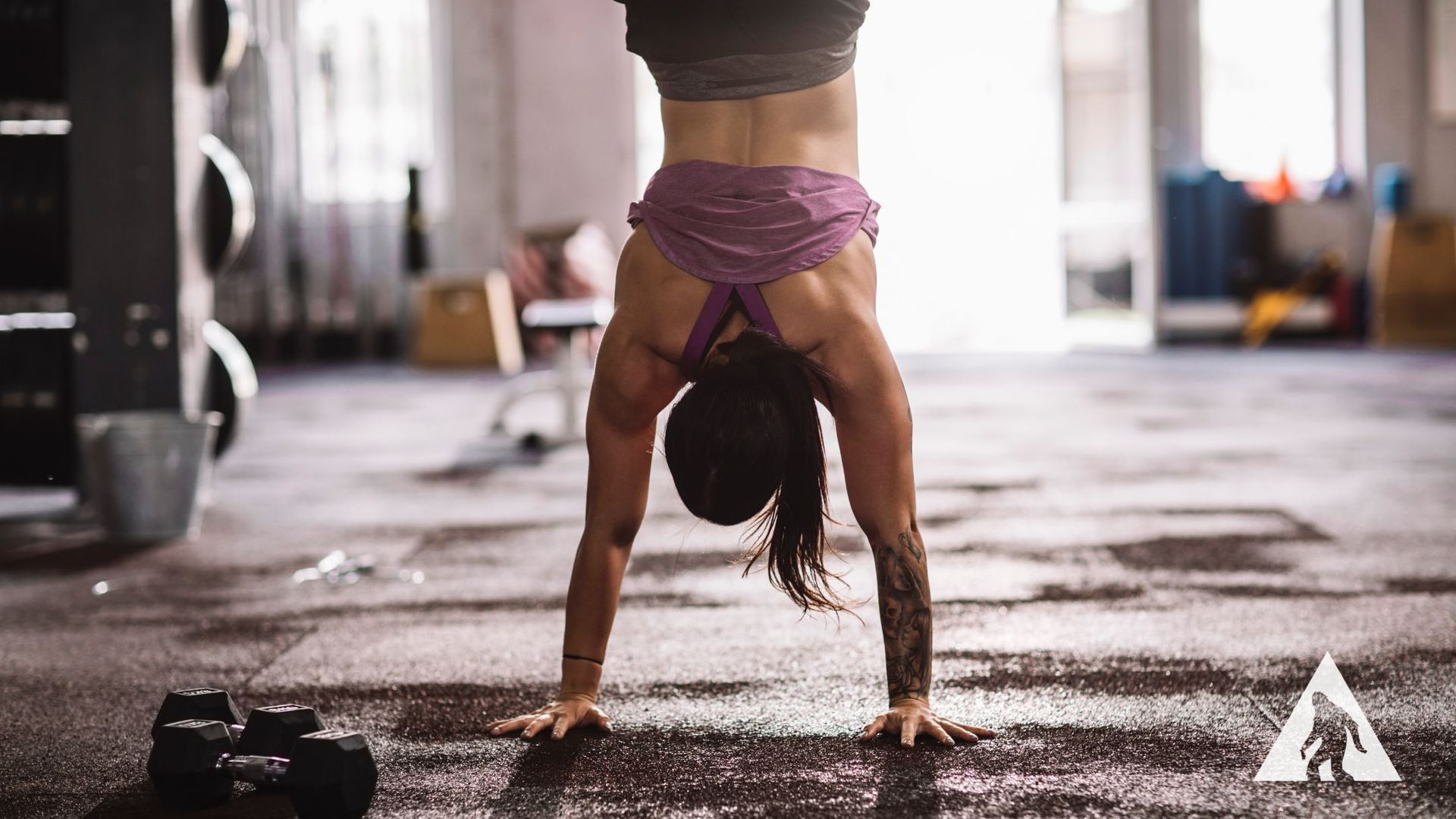
Even if you never plan to do a handstand, working toward one has real benefits for your strength, balance, coordination, and brain. Here are 6 reasons to add handstand progressions to your training.
1. Upper Body Strength You Can’t Get Any Other Way
Holding your body inverted loads your shoulders, triceps, chest, and upper back under your full bodyweight. The demand is completely different from any pressing movement you do right-side-up. Working toward a handstand — even just doing wall holds and shoulder presses — builds pressing strength that carries over to everything else.
2. Core Strength That Actually Works
A handstand requires total-body tension from fingertips to toes. Your core isn’t doing a crunch — it’s bracing an entire system to stay balanced upside down. That full-body tension is exactly the kind of core work that protects your spine and improves every other athletic movement.
3. Better Body Awareness (Proprioception)
Handstand training forces your nervous system to develop fine motor control. The small adjustments you make to stay balanced build proprioception — your sense of where your body is in space. Better proprioception means better coordination, fewer injuries, and an easier time learning other new physical skills.
4. Balance Training for Your Vestibular System
Your inner ear is responsible for balance and spatial orientation. Being inverted challenges it in a way that normal training doesn’t. Improving your vestibular system has direct benefits for fall prevention, athletic performance, and overall stability — especially as you age.
5. Precise Muscle Control
Holding a handstand requires intentional control over individual muscle groups. You learn to engage and relax with precision. Conscious muscle control is a skill that transfers to every lift, every sport, and every physical activity. The better your conscious control, the better your unconscious movement patterns become.
6. It’s Good for Your Brain
Learning a new physical skill builds new neural pathways. The cognitive load of handstand training — coordinating balance, strength, and spatial awareness simultaneously — is genuine brain exercise. It improves memory, problem-solving, and the ability to learn new skills faster. Your brain stays sharp when you keep challenging your body.
You don’t have to become a gymnast. Start with wall holds, progress to kick-ups, work on shoulder stability. The journey toward a handstand builds real athleticism regardless of whether you ever get fully upright.